Money Sitting on the Table: Refunds British Consumers Deserve by Default and Seldom Receive
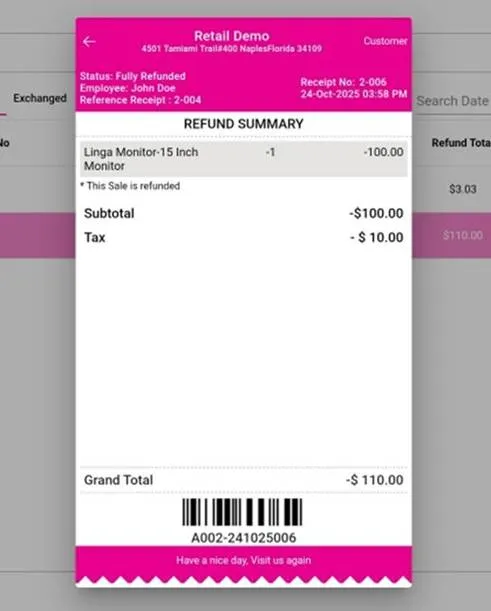
Photo: receipt refund money back wallet UK consumer, via support.lingaros.com
There is a quiet asymmetry at the heart of British consumer life. When a company believes you owe it money, it pursues the debt with efficiency — reminders, letters, default notices, credit file entries. When you are owed money by a company, the process is conspicuously less energetic. No reminders arrive. No letters follow. The refund simply waits, sometimes forever, for you to notice.
This isn't conspiracy; it's incentive. Every refund claimed is a cost, and every refund unclaimed is margin. The result is a category of consumer money that exists in a state of permanent suspension — owed in principle, withheld in practice. Here are five of the most common examples, and the words that unlock them.
Duplicate Direct Debits
Perhaps the purest example. Two identical subscriptions, one bank account, months of double payments — and no obligation on the provider's part to notice. Under the Direct Debit Guarantee, you can claim an indemnity from your bank for any payment taken in error, and banks must refund promptly.
"I am claiming a Direct Debit indemnity under the Direct Debit Guarantee. A duplicate payment of £[amount] was collected on [date] in error. Please refund this to my account and confirm in writing."
Cancelled Package Holidays
When a package holiday is cancelled by the operator — or cancelled by you within the terms of the Package Travel Regulations 2018 — a refund is due within 14 days. During the pandemic, many operators substituted credit notes for cash refunds. Refund credit notes remain redeemable for cash, and operators are legally obliged to honour that.
"Under the Package Travel and Linked Travel Arrangements Regulations 2018, I am entitled to a full refund within 14 days of cancellation. Please process the refund of £[amount] to my original payment method."
Overpaid Council Tax
Move house mid-year, qualify for a discount you were never given, or overpay through an old direct debit, and your council owes you a credit balance. Councils rarely chase you to hand it back — but they will pursue arrears with vigour.
"I believe my council tax account holds a credit balance following [reason]. Please refund the overpayment of £[amount] to [account details] under your refunds policy."
Faulty Goods Under the Consumer Rights Act
Buy something, and it breaks within 30 days: you're entitled to a full refund, not a credit note, not a repair — a refund. Between 30 days and six months, the burden falls on the retailer to prove the fault wasn't present at purchase. Yet staff routinely offer store credit first, because it keeps the money in the building.
"Under the Consumer Rights Act 2015, I am entitled to a full refund as the goods were faulty within 30 days of purchase. I reject the offer of a credit note. Please refund £[amount] to my original payment method."
Unused Season Tickets
Annual travelcards, gym-adjacent season passes, parking permits — many operators offer pro-rata refunds on unused portions but advertise the fact nowhere. National rail operators, for instance, will refund unused season tickets subject to an administrative fee, something few commuters learn until they ask.
"I wish to surrender my season ticket, valid until [date], and request a pro-rata refund of the unused portion in line with your published refund policy, less any applicable administration fee."
The Principle Behind the Practice
None of this requires confrontation. The refunds above are not favours to be wheedled; they are obligations to be stated plainly and enforced calmly. The common thread is that each one depends on the consumer initiating the process — and companies have no reason to make initiation easy.
So make it easy for yourself instead. Keep records. Quote the relevant rule. Set a deadline. And remember the underlying arithmetic: a refund claimed costs you a letter; a refund unclaimed costs you money. Only one of those is a price worth paying.