Margins on the Menu: Inside the Small British Firms Betting on Radical Honesty
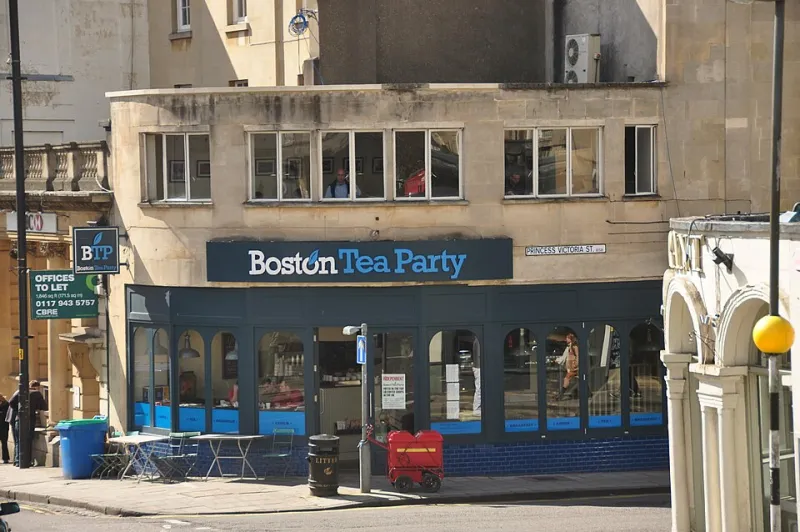
Photo: Nilfanion, CC BY-SA 4.0, via Wikimedia Commons
The chalkboard outside the café on Leith Walk lists more than the day's soups. Alongside the flat white and the morning bun, it sets out what the coffee cost the business per cup, what the milk supplier was paid, and roughly where the margin falls. Customers queue anyway. Some, the owner suspects, queue because of it.
This is one of a small but growing number of British firms treating openness not as a marketing garnish but as an operating principle — and, in several cases, as a competitive weapon.
The Plumber Who Capped Himself
Two hundred miles south, a Manchester plumbing firm has taken a different tack: it publishes a ceiling on callout charges. Whatever the job turns out to involve, the customer knows in advance the worst number they could see on the invoice.
"The trade has a reputation problem, and it earned it," the proprietor says. "Half my advertising budget used to be overcoming suspicion. Now the cap does that work for me. People ring because they're tired of bracing themselves."
The trade-off is real. On complex jobs, the cap occasionally means absorbing a loss. But the firm's figures suggest the cost is offset by volume: referral rates have roughly doubled since the policy was introduced, and the advertising spend needed to win each job has fallen.
Does Honesty Pay?
It is tempting to treat these businesses as saints and leave it there. That would be a mistake, and it would also be unfair to them — because most of the owners we spoke to frame their choices in blunt commercial terms.
The Edinburgh café's published margins, for instance, serve a purpose beyond virtue. By showing customers that a £3.40 flat white carries only pence of coffee cost but substantial costs in rent, wages, and waste, the business has pre-empted the most common complaint in hospitality: that prices are arbitrary. Complaints about the last two price rises, the owner reports, were negligible.
There is a broader lesson here for consumers, too. Transparency is something you can ask for. A firm confident in its pricing will usually explain it. One that isn't will usually deflect — and that hesitation tells you what the small print won't.
The Limits of the Model
Honest analysis requires the caveats. Radical transparency is easier to practise in consumer-facing trades — food, trades, retail — where customers can see the product and judge the service directly. In opaque markets, it can be exploited: a competitor can quietly undercut a transparent firm's published prices while doing none of the work behind them.
Nor is every customer converted. Some will always shop on price alone, and the ethical firm's costs — fair wages, honest margins, proper materials — are rarely the cheapest in any market.
What the evidence from these firms suggests is narrower but more interesting: honesty is not a tax on the business. Managed well, it is a substitute for marketing spend, a filter for the right customers, and a discipline that keeps the firm's own house in order. Doing it right, it turns out, can be the commercially rational choice — just not the effortless one.